
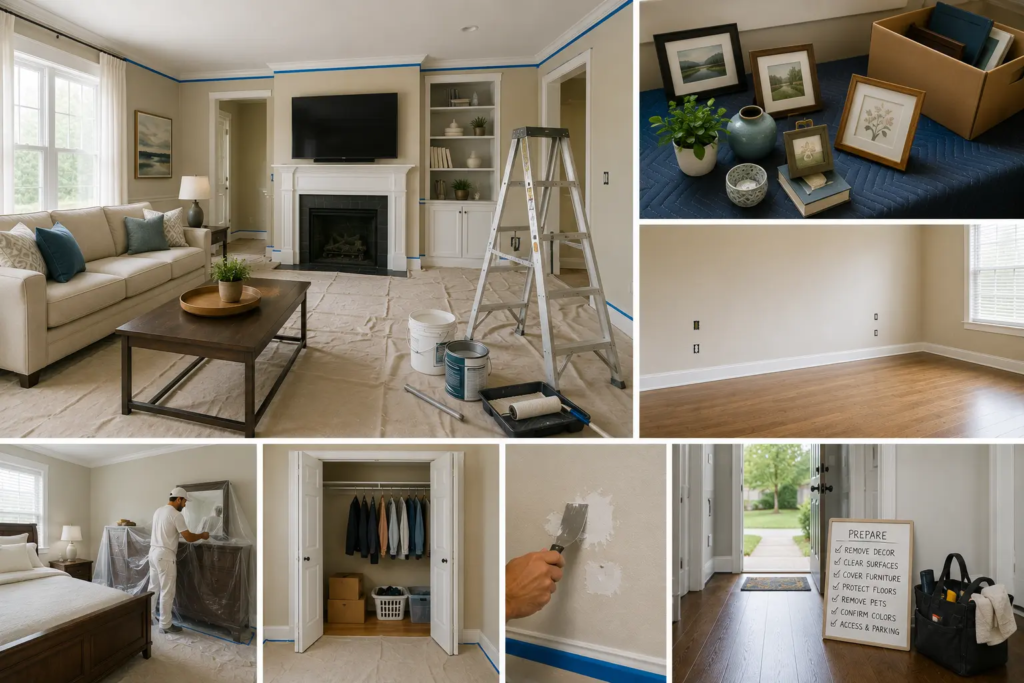
Hiring professional painters can remove much of the work involved in transforming your home’s interior.
However, homeowners still play an important role before the project begins.
Furniture, decorations, electronics, fragile items, pets, and access to rooms can all affect how efficiently a painting project moves forward.
Knowing how to prepare your home for interior painting can help create a smoother process from the first day of work through the final walkthrough.
Preparation does not mean doing the painter’s job yourself. Homeowners generally should not start patching random areas, applying primer, or removing materials unless this has been discussed with the painting contractor.
Instead, focus on making the rooms accessible and protecting personal belongings.
For homeowners in Wheaton, Naperville, Elgin, Geneva, Addison, Hanover Park, and surrounding western suburbs of Illinois, here is what to consider before professional interior painters arrive.
What Should You Do Before Professional Painters Arrive?
Start with a simple objective.
Give painters reasonable access to the surfaces included in the project.
If walls are surrounded by furniture, decorations, boxes, and electronics, additional time may be required before painting can begin.
Before the scheduled start date, walk through every room being painted.
Identify anything that could interfere with access to:
- Walls
- Ceilings
- Baseboards
- Doors
- Door frames
- Windows
- Closets
- Trim
What needs to be moved depends on the scope of the project.
Remove Small Items From the Room
Small objects are generally easier for homeowners to move before painters arrive.
Consider removing:
- Lamps
- Books
- Small tables
- Decorative objects
- Plants
- Toys
- Personal photographs
- Electronics
- Collectibles
This reduces clutter and helps create more open working space.
It also allows you to personally handle fragile or valuable belongings.
What Should You Do With Large Furniture?
Large furniture may not always need to leave the room completely.
Depending on the size of the room and project, furniture can sometimes be moved toward the center.
This creates access to the walls.
Items can then be appropriately protected.
However, do not assume this is possible in every room.
A small bedroom with a king-size bed presents different challenges from a large living room with one sofa.
Ask the painting contractor how much clearance is needed before moving heavy furniture.
Remove Wall Decorations
Paintings, photographs, mirrors, clocks, shelves, and other wall decorations should generally be removed from surfaces being painted.
Take them down carefully.
Store them somewhere safe.
If an item will return to exactly the same location, discuss whether existing hardware should remain.
If you are changing the room’s layout, unwanted holes may need to be repaired before painting.
Tell the painters which holes should stay and which should disappear.
Don’t Remove Every Nail Without Thinking
This small detail can prevent unnecessary work.
If you plan to hang the same artwork in the same location after painting, you may want to retain the existing mounting point.
If you are redesigning the room, those holes may need patching.
Communicate your plans before surface preparation begins.
Otherwise, a painter may repair a hole you intended to reuse or leave one you expected to be removed.
What About Curtains and Window Treatments?
Curtains can interfere with access to walls and window trim.
If window trim is included in the painting project, more extensive removal may be necessary.
Blinds and shades may also affect access.
Discuss these items before the start date.
Do not dismantle complicated window treatments unnecessarily if the painter only needs access to nearby wall surfaces.
Clear Countertops When Necessary
If the kitchen, bathroom, or laundry room is being painted, clear exposed countertops.
Remove:
- Small appliances
- Toiletries
- Food
- Decorative objects
- Towels
- Cleaning products
Painters need space to work around walls, backsplashes, cabinets, and trim.
A clear countertop also reduces the risk of personal items being exposed to dust or accidentally knocked over.
Prepare Closets If They Are Being Painted
Closet painting requires more homeowner preparation than many people expect.
If only the exterior closet doors are being painted, contents may remain unaffected.
If the closet interior is included, remove clothing, boxes, shoes, and stored belongings.
An empty closet provides access to walls, shelves, baseboards, and ceilings.
This can be particularly convenient before moving into a new home.
What Should You Do With Electronics?
Electronics deserve careful attention.
Televisions, computers, gaming equipment, speakers, and other devices can be sensitive to dust and physical damage.
If practical, move smaller electronics to another room.
For larger systems, discuss the setup with the painters.
Do not assume contractors will disconnect complicated entertainment or computer systems.
Handle important cables and electronics yourself unless another arrangement has been established.
Protect Valuable and Fragile Items Yourself
Painters can protect work areas.
However, homeowners should personally secure items that are financially or emotionally valuable.
Examples include:
- Jewelry
- Important documents
- Collectibles
- Antiques
- Delicate artwork
- Family heirlooms
- Expensive electronics
Move these belongings outside the work area.
This is simpler than trying to protect them in place.
What About Pets During Interior Painting?
Pets should be considered before work begins.
Open doors, unfamiliar workers, equipment, and changing room access can create problems.
Dogs and cats may also walk through work areas or contact freshly painted surfaces.
Plan a safe location for pets away from active painting.
Depending on your home, this might be another room or another appropriate location.
The objective is to keep both the animals and work area safe.
Plan for Children Too
Young children may be curious about ladders, paint supplies, tools, and newly painted rooms.
Restrict access to active work areas.
This becomes particularly important when several rooms are being painted simultaneously.
Families may want to establish which rooms will remain available during the project before painting begins.
Do You Need to Clean the Walls Yourself?
Not necessarily.
The painting contractor should evaluate the surfaces and explain the preparation included in the project.
However, unusual conditions should be mentioned.
For example, tell the painter about areas exposed to:
- Cooking residue
- Heavy dirt
- Smoke
- Crayon
- Marker
- Adhesive
- Other contamination
Different surfaces can require different preparation.
Do not apply household cleaners immediately before painting without discussing them with the contractor.
Residue left by certain products could affect the surface.
Should You Patch Holes Before Painters Arrive?
Usually, it is better to discuss repairs first.
Professional painting estimates often account for a certain level of surface preparation.
Homeowner repairs can sometimes create more work when patches are not properly sanded or blended.
Show the painter the damage.
Then determine who will handle it.
This is particularly important for larger holes, cracks, drywall damage, and plaster repairs.
Identify Water Damage Before Painting
Water stains should not simply disappear under fresh paint without investigation.
If you know about a previous leak, tell the painter.
If the leak is active, repair it before painting.
Common sources include:
- Plumbing
- Roof leaks
- Windows
- Bathrooms
- HVAC-related condensation
Painting should occur after the underlying moisture problem has been addressed.
Confirm Your Paint Colors Early
Waiting until the morning painting begins to choose colors can create unnecessary delays.
Ideally, finalize colors before the project start date.
Consider:
- Wall colors
- Ceiling colors
- Trim colors
- Door colors
- Accent walls
If you are uncertain, test samples beforehand.
Evaluate them during different times of day.
Confirm the Paint Finish Too
Color is only half the decision.
You may also need to select finishes for different surfaces.
Depending on the project, this can include:
- Flat
- Matte
- Eggshell
- Satin
- Semi-gloss
Walls, ceilings, doors, and trim may use different finishes.
Confirm these details before work begins.
Make Sure Painters Can Access the Property
This sounds obvious, but access problems can delay a project.
If you will not be home, establish how painters will enter.
Consider:
- Keys
- Garage access
- Alarm systems
- Gate codes
- Building access
- Parking restrictions
Make sure any arrangements are agreed upon before the scheduled start.
Discuss Parking and Equipment Access
Professional painters may need to bring ladders, tools, protective materials, and paint into the property.
Easy access can help.
If your neighborhood, condominium, or building has parking restrictions, communicate them in advance.
Do the same for loading areas or association requirements.
Should You Remove Switch Plates?
Ask the painting contractor.
Some painters include removal and reinstallation of switch and outlet covers as part of their normal process.
Others may handle the area differently.
Do not automatically remove every electrical cover unless requested.
If you do remove them, keep screws and plates organized by room.
What About Smoke Detectors and Other Wall Devices?
Do not casually remove electrical or safety equipment.
Thermostats, alarms, sensors, security equipment, and smoke detectors may require special consideration.
Point them out during the project walkthrough.
Painters can determine how to work around them or whether another professional needs to handle specific equipment.
Create a Clear Path Through the Home
Painters need to move between rooms while carrying supplies and equipment.
Clear unnecessary obstacles from hallways and entryways.
Pay particular attention to:
- Shoes
- Toys
- Boxes
- Small furniture
- Pet equipment
- Loose rugs
A clear pathway makes movement through the property easier.
Discuss Daily Cleanup Expectations
If the project takes several days, ask how rooms will be left at the end of each workday.
You may need access to parts of the home during the evening.
Understanding the daily workflow can help your family plan around the project.
For larger jobs, you may want to know which rooms will be painted first and when they are expected to become accessible again.
Ventilation During Interior Painting
Ventilation is another consideration during interior painting and remodeling.
The U.S. Environmental Protection Agency’s guidance for indoor air quality during remodeling discusses ventilation, paints, coatings, dust, and other factors that can affect indoor environments during home improvement projects.
Homeowners should also follow product instructions and any guidance provided by their painting contractor.
This EPA resource provides a strong high-authority, non-competing external link for this article.
Preparing a Vacant Home for Painting
Painting an empty property can simplify the process considerably.
This is one reason homeowners often schedule painting before moving into a newly purchased house.
Without furniture, painters have easier access to:
- Walls
- Closets
- Ceilings
- Baseboards
- Doors
- Trim
If you are moving into a home in Naperville, Wheaton, Geneva, Elgin, Addison, or Hanover Park, consider whether painting can be completed before your furniture arrives.
Preparing for Painting in an Occupied Home
Painting an occupied home simply requires more coordination.
You do not necessarily need to move out.
Instead, determine which rooms are being worked on and what spaces will remain available.
For larger projects, painting can sometimes be organized in stages.
One part of the home is completed before work moves to another.
Discuss the expected sequence before the project begins.
Frequently Asked Questions About Preparing for Interior Painting
Do I need to move all furniture before painters arrive?
Not always. Smaller items should generally be removed, while larger furniture may sometimes be moved toward the center of the room. Ask the painter what clearance is required.
Should I remove pictures from the walls?
Yes, when those walls are being painted. Tell the painters whether existing nail holes should remain or be patched.
Do I need to clean the walls before professional painters arrive?
Not necessarily. Discuss surface preparation with the painting contractor. Point out unusual dirt, stains, grease, smoke residue, or other contamination.
Should I patch holes myself?
Usually, it is better to show the painter the damage first. Poorly completed patches can require additional correction before painting.
Should curtains be removed before painting?
They may need to be removed depending on whether walls, window trim, or both are being painted. Confirm the required access with the painter.
What should I do with pets?
Keep pets safely away from active painting areas. Open doors, equipment, workers, and wet paint can create unnecessary risks.
Can I stay in my home during interior painting?
Often, yes. This depends on the size and scope of the project. Discuss room access, ventilation, drying, and the daily work schedule beforehand.
Should closets be emptied?
If the closet interiors are being painted, they should generally be cleared so painters can access the surfaces.
When should I choose my paint colors?
Ideally, before the scheduled start date. Testing colors in advance can help prevent delays and rushed decisions.
Does Crestora Home Services provide interior painting?
Crestora Home Services provides professional residential painting throughout Wheaton, Naperville, Elgin, Geneva, Addison, Hanover Park, and surrounding western suburbs of Illinois.
A Little Preparation Can Make Painting Day Easier
You do not need to prepare the walls like a professional painter before the crew arrives.
Focus on your belongings and access.
Remove small objects. Take decorations off the walls. Secure valuables. Clear countertops when necessary. Make arrangements for children and pets.
Most importantly, communicate.
Tell the painting contractor about repairs, stains, moisture concerns, access issues, and anything else that could affect the project.
Good preparation helps painters focus on what you hired them to do: prepare and paint your home’s surfaces properly.
Crestora Home Services provides professional interior painting throughout the western suburbs of Illinois.
Homeowners preparing for an upcoming painting project can request a free painting quote based on the rooms, surfaces, and work required.