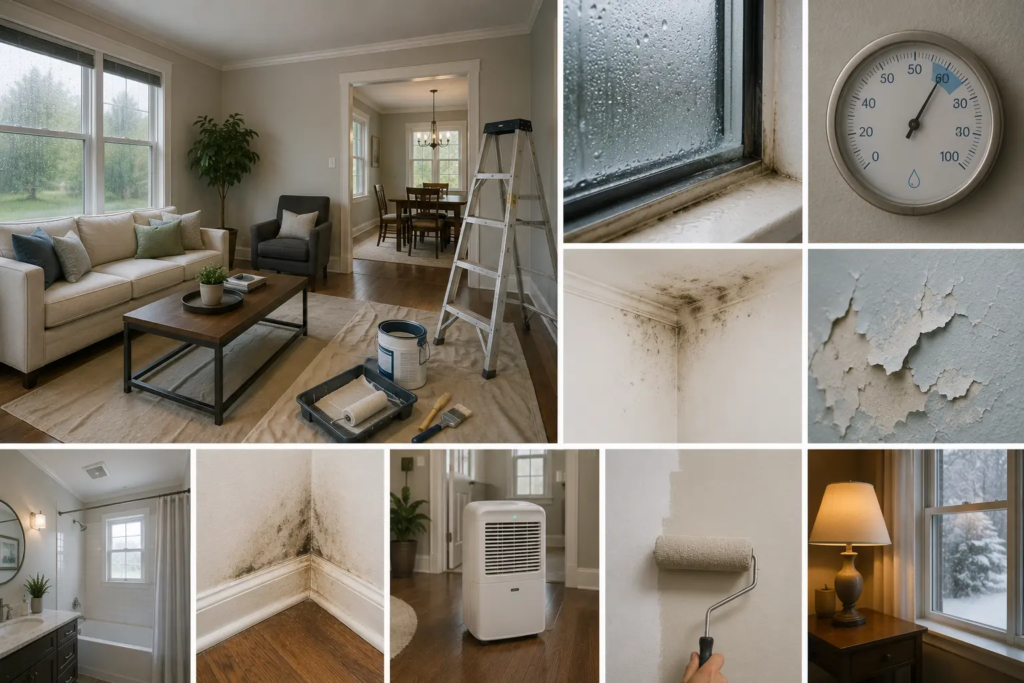
Interior paint may be protected from rain and snow, but it is not completely isolated from the weather outside.
Illinois homeowners experience substantial seasonal changes. Cold winters, warm summers, fluctuating humidity, heating, air conditioning, and changing indoor moisture levels can all influence the environment inside a home.
That makes humidity and interior paint an important consideration when planning a painting project.
Paint needs suitable conditions to dry and cure correctly. Existing painted surfaces can also react to moisture problems, condensation, and temperature changes.
For homeowners in Wheaton, Naperville, Elgin, Geneva, Addison, Hanover Park, and surrounding western suburbs of Illinois, understanding these conditions can help explain why some paint problems appear and why timing and ventilation matter.
Does Weather Affect Interior Painting?
Yes, although not in exactly the same way it affects exterior painting.
Interior walls are protected from direct rain, snow, wind, and sunlight.
However, outside weather influences indoor conditions.
During winter, heating systems can create a very different indoor environment from summer.
During humid weather, indoor moisture levels may increase.
Opening windows can also introduce outdoor humidity.
The conditions inside the room during painting matter more than the season alone.
Why Does Humidity Matter When Painting?
Most interior architectural paints require water or other components to evaporate as the coating dries.
Environmental conditions affect this process.
When humidity is high, drying can take longer.
When conditions are outside the paint manufacturer’s recommended range, application and curing may also be affected.
This is why professional painters consider more than just wall color.
Temperature, airflow, ventilation, and humidity can all matter.
What Is Relative Humidity?
Relative humidity describes the amount of moisture in the air compared with how much moisture the air can hold at a particular temperature.
You have probably experienced the difference personally.
A warm, humid day feels different from a warm, dry day.
Inside the home, relative humidity can be influenced by:
- Outdoor conditions
- Air conditioning
- Heating
- Cooking
- Showers
- Humidifiers
- Dehumidifiers
- Basements
- Ventilation
- Air leaks
These factors can create different painting conditions even within the same house.
Can High Humidity Make Paint Dry More Slowly?
It can.
Higher moisture levels in the air can slow the drying process of some water-based coatings.
That does not mean painting is impossible whenever the weather is humid.
Modern homes use heating, ventilation, and air conditioning systems that can help maintain suitable indoor conditions.
The important factor is the environment where the paint is actually being applied.
Professional painters should also follow the product manufacturer’s instructions for temperature, humidity, drying, and recoating.
Is Low Humidity Better for Painting?
Not automatically.
Extremely dry conditions can also affect how quickly paint dries.
If a coating begins drying too quickly, application can become more difficult.
The goal is not simply to create the driest room possible.
It is to maintain conditions within the recommended range for the specific paint product.
Can You Paint Inside During an Illinois Winter?
Yes.
Interior painting is commonly completed during winter.
In fact, homeowners may find winter convenient because more time is spent indoors and exterior home improvement projects may be limited.
The house should be maintained at an appropriate indoor temperature.
Paint should also be stored and applied according to manufacturer instructions.
If walls are unusually cold because of insulation problems or other conditions, that may require additional consideration.
Winter Can Reveal Interior Moisture Problems
Cold weather can create another issue: condensation.
Warm indoor air contains moisture.
When that air contacts a sufficiently cold surface, condensation can form.
Windows are a common example.
In some homes, moisture may also become noticeable on or near exterior walls.
If painted surfaces repeatedly become damp, investigate why.
Simply applying another coat of paint does not correct an underlying condensation problem.
Can You Paint During a Hot Illinois Summer?
Yes.
Air-conditioned homes can provide controlled interior conditions even when outdoor temperatures are high.
However, open windows may introduce hot and humid air.
Rooms without adequate cooling can also become much warmer than the rest of the home.
Again, evaluate the actual conditions inside the space rather than relying solely on the outdoor temperature.
Air Conditioning Can Help Control Humidity
Air conditioning does more than cool the house.
It can also remove moisture from indoor air.
During humid summer weather, a properly functioning HVAC system can help create more stable indoor conditions.
This can be useful during an interior painting project.
However, painters should still follow the ventilation and environmental recommendations for the products being used.
Bathrooms Require Special Attention
Bathrooms routinely experience higher moisture levels than many other rooms.
Showers and baths introduce significant humidity.
Good ventilation is therefore important.
If bathroom paint is:
- Peeling
- Bubbling
- Discolored
- Frequently damp
do not automatically assume the paint itself is defective.
Evaluate ventilation and moisture conditions first.
A new coat of paint may fail again if the underlying problem remains.
Kitchens Can Also Produce Moisture
Cooking introduces both heat and moisture into the indoor environment.
Boiling water can release substantial water vapor.
Kitchen exhaust systems can help remove moisture and cooking contaminants when properly installed and used.
Walls and ceilings near cooking areas may also require additional cleaning and preparation before repainting.
Why Basements Can Be Different
Basements often have different temperature and humidity conditions from upper floors.
They may feel cooler during summer.
Some basements also experience elevated moisture.
Before painting basement walls, determine whether there are signs of water intrusion or persistent dampness.
Look for:
- Water stains
- Peeling coatings
- Efflorescence on masonry
- Damp areas
- Musty conditions
- Visible moisture
Paint should not be used to conceal an unresolved water problem.
Humidity and Drywall
Drywall and joint compound can absorb moisture.
When walls have experienced water damage, simply waiting until the surface appears dry may not always tell the complete story.
Significant water damage may require further evaluation.
Damaged drywall can sometimes require replacement rather than cosmetic painting.
The source of the moisture should always be corrected first.
Humidity and Plaster Walls
Older Illinois homes may contain plaster.
Plaster can also be affected by water intrusion and prolonged moisture.
Stains, cracks, loose areas, or deterioration should be evaluated before painting.
Older properties may have several previous coating layers, making proper diagnosis even more important.
What Causes Paint to Bubble?
Paint bubbles can have several possible causes.
Moisture is one possibility.
Poor surface preparation or coating compatibility can also contribute.
If bubbling appears near bathrooms, windows, exterior walls, plumbing, or ceilings, investigate whether moisture is involved.
Do not simply break the bubbles and repaint without understanding the cause.
Why Does Interior Paint Peel?
Peeling paint indicates that the coating is losing adhesion.
Possible contributing factors include:
- Moisture
- Poor preparation
- Contaminated surfaces
- Previous coating failure
- Incompatible products
- Application conditions
Determining the cause matters.
Painting over peeling material without proper preparation is unlikely to provide a durable solution.
Watch for Water Stains on Ceilings
Ceiling stains are a warning sign worth investigating.
Possible causes include plumbing leaks, roof leaks, bathroom problems, or previous water damage.
If the source has been repaired and the surface is suitable for painting, additional preparation may be required before applying finish paint.
If the leak remains active, painting should wait.
Can Humidity Affect Paint Color?
Environmental conditions can affect how paint dries and cures.
However, perceived color differences can also come from lighting, sheen, wall texture, and application.
If two areas of the same wall appear different, do not immediately assume humidity changed the color.
Evaluate the complete situation.
How Long Should Paint Dry Between Coats?
There is no universal drying time for every interior paint.
Follow the manufacturer’s instructions.
Drying and recoating times can vary based on:
- Product
- Temperature
- Humidity
- Ventilation
- Film thickness
Applying another coat too soon can create problems.
Professional painters should account for actual conditions rather than rushing simply to complete a room faster.
Drying and Curing Are Not the Same
A wall can feel dry to the touch before the coating has fully cured.
Curing is the longer process through which the coating develops its final properties.
This is why homeowners should be cautious about aggressive cleaning or placing objects directly against newly painted surfaces immediately after painting.
Follow product recommendations regarding cure time and normal use.
Should You Open Windows While Painting?
It depends on the conditions.
Opening windows can increase ventilation.
However, if the outdoor air is extremely humid, opening every window may also introduce substantial moisture.
Ventilation should be appropriate for the products being used and the environmental conditions.
Mechanical ventilation and HVAC systems may also play a role.
Indoor Air Quality Matters During Painting
Painting is part of the home’s indoor environment.
The U.S. Environmental Protection Agency’s guidance on indoor air quality during remodeling discusses ventilation, paints, coatings, moisture, dust, and other considerations during renovation projects.
The EPA also recommends controlling indoor moisture as part of maintaining good indoor air quality.
This makes it a strong high-authority, non-competing external resource for homeowners interested in the relationship between painting, ventilation, and moisture.
When Is the Best Season for Interior Painting in Illinois?
There is no single best season.
Interior painting can be completed throughout the year when indoor conditions are appropriate.
Instead of asking whether spring is better than winter, consider:
- Indoor temperature
- Relative humidity
- HVAC operation
- Ventilation
- Surface condition
- Product requirements
A climate-controlled home may provide suitable conditions during seasons when outdoor painting would be difficult.
Interior Painting in Naperville and Wheaton
Seasonal weather is part of homeownership throughout northern Illinois.
Homes in Naperville, Wheaton, Geneva, Elgin, Addison, and Hanover Park experience cold winters, warm summers, and changing humidity.
The condition of individual homes can vary considerably.
A newer property with modern HVAC equipment may maintain stable indoor conditions.
An older home may contain cold exterior walls, older windows, plaster, or different ventilation characteristics.
Painting decisions should be based on the actual property.
Frequently Asked Questions About Humidity and Interior Paint
Does humidity affect interior paint?
Yes. Humidity can influence drying and curing conditions. Always follow the environmental recommendations provided by the paint manufacturer.
Can I paint indoors when it is raining outside?
Potentially, yes. What matters most is the environment inside the room. High indoor humidity may slow drying even though the painted surfaces are protected from direct rain.
Can I paint my house interior during winter?
Yes. Interior painting can be completed during winter when the home maintains suitable temperature, humidity, and ventilation conditions.
Does paint take longer to dry when it is humid?
High humidity can slow the drying process of some coatings because moisture evaporates more slowly.
Can humidity cause paint to peel?
Moisture can contribute to paint adhesion problems. However, peeling can have several causes, including poor preparation and coating failure.
Why is my bathroom paint peeling?
Excessive moisture or inadequate ventilation may contribute. Other causes are possible. Identify the underlying issue before repainting.
Should I paint over a water stain?
First identify and correct the source of the moisture. Once the problem is resolved, the surface can be evaluated for the appropriate preparation and painting process.
Should I open windows after interior painting?
Ventilation can be useful, but outdoor temperature and humidity should also be considered. Follow the paint manufacturer’s instructions and your contractor’s recommendations.
How long does interior paint take to cure?
Cure times vary by product and environmental conditions. Consult the specific paint manufacturer’s instructions.
Does Crestora Home Services paint during winter?
Crestora Home Services provides professional residential painting throughout Wheaton, Naperville, Elgin, Geneva, Addison, Hanover Park, and surrounding western suburbs of Illinois. Interior painting can be considered throughout the year when conditions are appropriate.
Control the Environment, Not Just the Color
A successful interior painting project involves more than choosing an attractive shade.
The environment matters too.
Temperature, humidity, ventilation, surface moisture, and drying time can all influence the painting process.
This is particularly important in bathrooms, kitchens, basements, and areas with previous water damage.
If paint is peeling, bubbling, or repeatedly becoming stained, do not assume another coat is the complete solution.
Find the cause first.
Crestora Home Services provides professional interior painting throughout the western suburbs of Illinois.
If your home’s walls or ceilings need refreshing, request a free painting quote based on the surfaces, existing conditions, and rooms involved.