
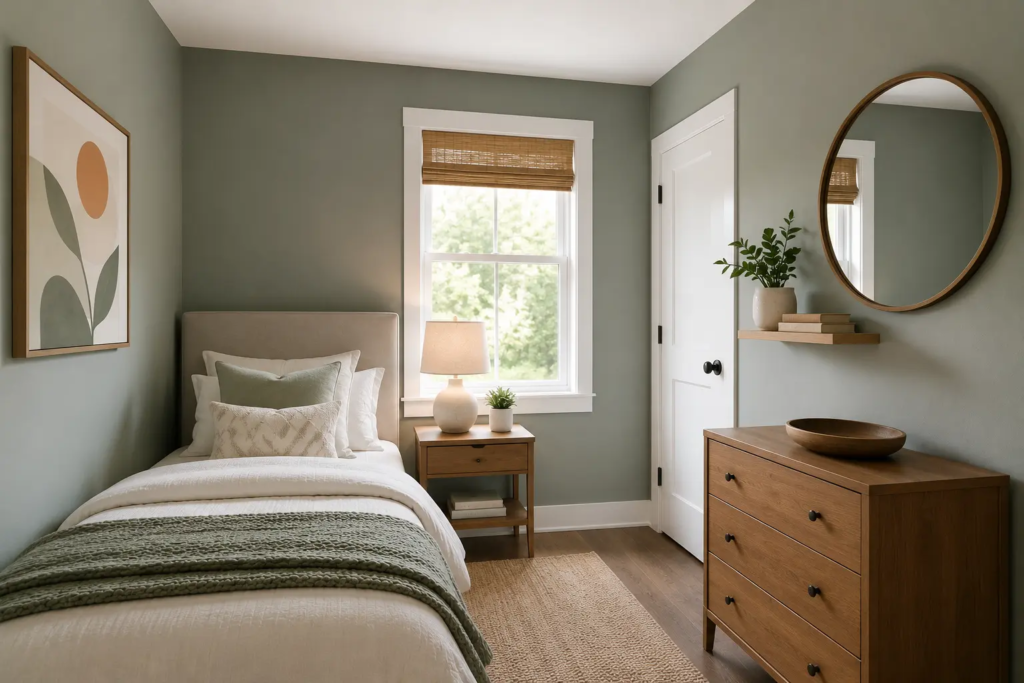
Small rooms can create some of the most difficult color decisions in a home.
Many homeowners automatically assume that a small room must be painted white. That is not always true.
Light colors can help create a brighter and more open appearance. However, darker colors can also work well when they are used intentionally. Natural light, artificial lighting, flooring, furniture, ceiling height, and the purpose of the room all matter.
The goal is not simply to make every small room appear larger.
The goal is to choose paint colors for small rooms that make the space feel comfortable, balanced, and connected to the rest of the home.
For homeowners in Wheaton, Naperville, Elgin, Geneva, Addison, Hanover Park, and surrounding western suburbs of Illinois, thoughtful color selection can transform bedrooms, bathrooms, offices, hallways, and other compact spaces.
Do Light Paint Colors Make Small Rooms Look Bigger?
Light colors can help a small room feel brighter.
They reflect more available light than many darker colors. This can reduce strong visual contrast and create a more open appearance.
Popular choices include:
- Warm white
- Off-white
- Light beige
- Soft gray
- Pale greige
- Muted blue
- Light green
However, color alone cannot physically make a room larger.
Furniture placement, lighting, flooring, windows, and clutter also influence how spacious a room feels.
Does a Small Room Have to Be White?
No.
White is useful, but it is not the only option for small spaces.
Some white paints can even create an undesirable appearance when their undertones conflict with the room.
A white with cool undertones may look very different next to warm wood flooring than a warmer white.
Small rooms can also work beautifully with muted colors.
Soft blues, greens, beige tones, and subtle grays can add character without overwhelming the space.
Can You Use Dark Paint in a Small Room?
Yes.
The idea that dark colors should never be used in small rooms is too simplistic.
Dark colors can create depth and atmosphere.
A small home office, powder room, reading area, or bedroom can sometimes benefit from a deeper color.
The result will depend heavily on lighting.
A dark room with limited lighting can feel dramatically different from one with a large window and strong artificial illumination.
Homeowners should decide whether they want the room to feel brighter or more intimate.
Both can be valid design choices.
Natural Light Should Influence Your Decision
Before choosing a color, determine how much natural light enters the room.
A small bedroom with a large window may provide much more flexibility than an interior hallway with almost no natural light.
Observe the room throughout the day.
A paint sample can look different in:
- Morning sunlight
- Afternoon light
- Cloudy weather
- Artificial light
- Evening conditions
Do not make a final color decision based only on how a sample looks under store lighting.
Why Paint Undertones Matter in Small Spaces
Undertones are subtle colors within the primary paint color.
A gray can contain blue, green, purple, or warm undertones.
White can lean warm, cool, yellow, gray, or even slightly pink.
These differences can become more noticeable when the paint is placed next to flooring, cabinets, furniture, or trim.
Small rooms provide less visual distance between these surfaces.
That makes coordinating undertones particularly important.
What Are the Best Colors for a Small Bedroom?
Bedrooms give homeowners considerable freedom.
If you want a bright and open appearance, consider softer colors.
Warm whites, muted blues, pale greens, and light neutrals can work well depending on the room.
If you prefer a more dramatic bedroom, deeper colors can create a comfortable and intimate atmosphere.
The best choice depends on the mood you want.
Do not select a bedroom color only because someone claims it will make the room look larger.
You also need to enjoy living with it.
What Colors Work for Small Bathrooms?
Bathrooms are an excellent place to experiment with color.
A small bathroom does not automatically need white walls.
Light colors can create a clean and bright appearance.
However, darker blues, greens, charcoal tones, and other deeper colors can create stronger visual character.
Consider the existing:
- Tile
- Vanity
- Countertop
- Fixtures
- Flooring
- Lighting
Bathroom paint should work with these permanent elements.
Paint products and finishes should also be appropriate for the room’s moisture conditions.
Paint Colors for Small Home Offices
A home office has different requirements from a bathroom or bedroom.
Some homeowners want a bright, energetic workspace.
Others prefer a darker environment that feels separate from the rest of the house.
Consider how the room will appear during video calls if that is part of your work.
The wall behind your desk may become a frequent background.
Color can therefore affect both the physical room and its appearance on camera.
What About Small Hallways?
Hallways often receive limited natural light.
Light neutrals can help maximize available illumination.
However, hallways also experience significant wall contact.
Paint finish and washability can therefore be as important as color.
Eggshell and satin are commonly considered for busy wall areas, depending on the specific product and desired appearance.
A beautiful color that is difficult to maintain may not be the most practical choice for a heavily used hallway.
Can Painting the Ceiling Make a Small Room Feel Different?
Yes.
The ceiling is an important visual surface.
White and lighter ceiling colors are common because they can create separation from the walls.
However, other approaches are possible.
Using similar colors on walls and ceilings can reduce strong visual boundaries.
In some designs, this can create a more enveloping appearance.
The correct strategy depends on ceiling height, room size, architecture, and desired style.
Should Walls and Trim Be the Same Color?
They can be.
Traditional interiors often use contrasting trim, frequently in white or another light color.
However, painting walls and trim in similar colors can reduce visual divisions.
This approach can work particularly well in some smaller rooms.
You can also create contrast through paint finish.
For example, walls and trim could use related colors while having different levels of sheen.
Avoid Too Many Color Transitions
A small space can feel visually busy when too many colors compete for attention.
This is especially relevant in small rooms connected to hallways or open areas.
You do not need to use one color everywhere.
However, colors should have a logical relationship.
Repeatedly changing wall colors across a compact area can create strong visual divisions.
A more coordinated palette may produce better flow.
Consider the Flooring Before Choosing Paint
Flooring occupies a large portion of the visual space.
Wood floors can contain warm, cool, red, yellow, or gray undertones.
Carpet and tile also influence wall colors.
A paint color that looks attractive on a screen may behave very differently when placed next to the actual flooring.
Bring samples into the room.
Evaluate them directly against permanent surfaces before making the final decision.
Furniture Size Also Changes How Color Feels
A small room filled with large furniture can already feel visually heavy.
Dark walls may strengthen that effect.
That does not mean they should automatically be avoided.
Instead, consider the complete composition.
A room with minimal furniture may support stronger wall colors more easily.
Furniture, wall color, flooring, curtains, and lighting should be considered together.
Test Paint Before Committing to the Entire Room
Testing is particularly valuable in small spaces.
A color can become much more dominant once it surrounds you on several walls.
View the sample under different lighting conditions.
Pay attention to how it interacts with trim and flooring.
If possible, evaluate more than one candidate before choosing.
A little extra planning can prevent repainting a room because the finished color looks significantly different from what you expected.
Small-Room Painting Before Selling a Home
Sellers sometimes worry that small bedrooms or bathrooms will appear even smaller to buyers.
Paint can help improve presentation, but it should be part of a broader strategy.
The National Association of REALTORS® guide to staging a home for sale discusses using neutral colors when painting areas that need attention as part of preparing a property for buyers.
Reducing clutter and arranging furniture appropriately can also influence how buyers perceive a small room.
Paint alone should not carry the entire burden.
Small-Room Painting in Naperville and Wheaton
Homes throughout the western suburbs of Illinois contain many different room sizes and layouts.
Older properties in Wheaton may include smaller bedrooms and architectural spaces that require careful color planning.
Homes in Naperville, Geneva, Elgin, Addison, and Hanover Park can have everything from compact powder rooms to home offices and narrow hallways.
There is no universal color that works for every small room.
The actual lighting, surfaces, architecture, and homeowner’s preferences should guide the decision.
Frequently Asked Questions About Paint Colors for Small Rooms
What color makes a small room look bigger?
Light colors can reflect more available light and may create a brighter, more open appearance. However, lighting, furniture, flooring, and room layout also influence how spacious the room feels.
Should small rooms always be painted white?
No. Soft neutrals, muted blues, greens, beige tones, and even darker colors can work in small rooms depending on the desired effect.
Can I paint a small bedroom a dark color?
Yes. Dark colors can create depth and a more intimate atmosphere. Consider the amount of natural and artificial light before making the decision.
What color is best for a small bathroom?
There is no single best color. Consider the tile, vanity, flooring, fixtures, lighting, and overall style. Both light and dark colors can work effectively.
Should the ceiling be lighter than the walls?
It can be, but it is not mandatory. Lighter ceilings are common, while using similar colors across walls and ceilings can create a different visual effect.
Does paint finish affect how big a room looks?
Paint finish affects how light interacts with the walls. Higher-sheen finishes reflect more light, but they can also make some surface imperfections more noticeable.
Should trim be white in a small room?
Not necessarily. White trim can create contrast, while similar wall and trim colors can reduce visual divisions. Both approaches can work.
Should I test paint colors first?
Yes. Testing allows you to see how a color responds to the actual lighting, flooring, furniture, and other surfaces in the room.
Does Crestora Home Services paint small rooms?
Crestora Home Services provides professional residential painting throughout Wheaton, Naperville, Elgin, Geneva, Addison, Hanover Park, and surrounding western suburbs of Illinois, including bedrooms, bathrooms, offices, hallways, and other compact spaces.
Make a Small Room Feel Intentional
The best paint colors for small rooms are not always the lightest colors.
Start by deciding what you want the room to feel like.
If you want brightness and openness, lighter colors may help. If you want depth and character, a darker or richer shade may be appropriate.
Then consider natural light, artificial lighting, flooring, furniture, trim, and the adjoining rooms.
A small space does not have to be visually boring.
With thoughtful color selection and proper painting, even the smallest room can become one of the most distinctive areas of the home.
Crestora Home Services provides professional interior painting throughout the western suburbs of Illinois.
If you are planning to refresh a bedroom, bathroom, office, hallway, or another small space, request a free painting quote based on the specific room and surfaces you want to transform.