
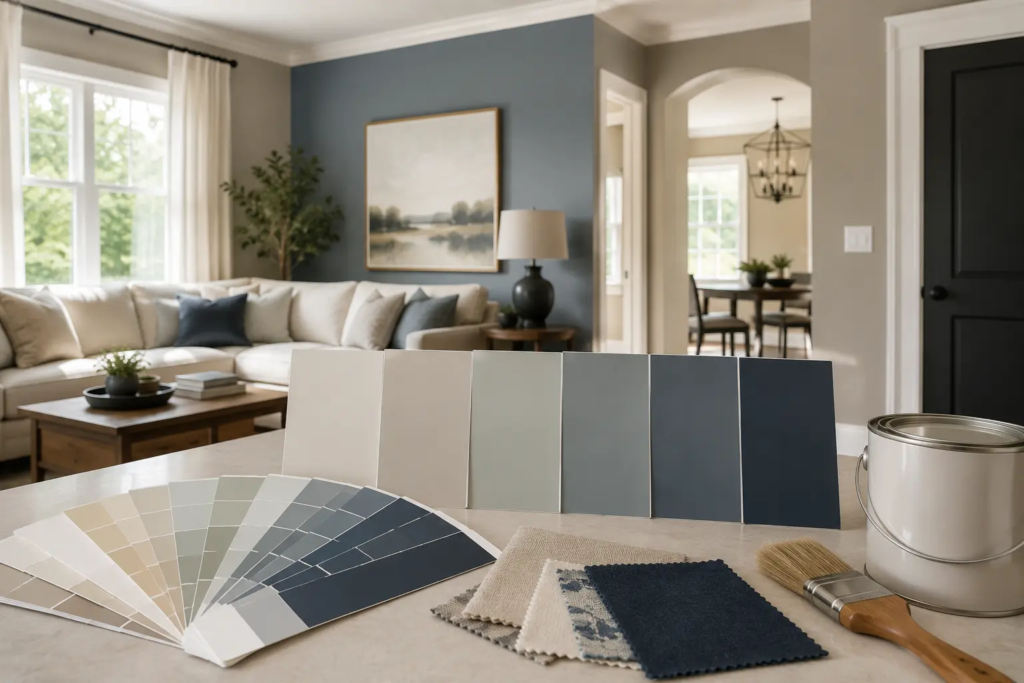
Choosing a new paint color sounds simple until you see hundreds of options.
White is not just white. Gray can look blue, green, warm, or cool depending on the room. A color that looks perfect on a small sample may appear completely different once it covers an entire wall.
This is why choosing interior paint colors should involve more than selecting a shade you like at the store.
Natural light, artificial lighting, flooring, furniture, room size, paint finish, and surrounding colors can all influence the final appearance.
For homeowners in Wheaton, Naperville, Elgin, Geneva, Addison, Hanover Park, and surrounding western suburbs of Illinois, careful color selection can help create rooms that feel brighter, cleaner, more modern, and more connected.
Why Do Paint Colors Look Different Inside Your Home?
Paint color is affected by its surroundings.
A color sample viewed under bright store lighting may look different inside a bedroom or living room.
Several factors can change how you perceive the color:
- Natural sunlight
- Artificial lighting
- Time of day
- Flooring
- Furniture
- Cabinets
- Countertops
- Nearby wall colors
- Paint finish
This is why choosing a color from a digital image or small sample alone can be risky.
The room itself should be part of the decision.
How Does Natural Light Affect Paint Colors?
Natural light can dramatically influence interior paint.
Rooms with large windows may experience significant color changes throughout the day.
Morning light can make a wall appear different from afternoon light. A room that receives limited natural light may also make certain colors appear darker.
Before choosing a final color, observe the room at several times during the day.
Do not evaluate the color only when sunlight is at its brightest.
You will be living with the room in the morning, afternoon, evening, and at night.
Artificial Lighting Matters Too
Once the sun goes down, your home’s lighting takes over.
Warm bulbs and cooler light sources can change how painted walls appear.
A neutral wall can suddenly look warmer or cooler depending on the lighting.
Homeowners should evaluate potential paint colors with the actual lights they normally use.
This is particularly important in rooms with limited windows.
Should You Test Paint Colors Before Painting?
Testing a color can help reduce surprises.
Instead of selecting a color based entirely on a small sample, consider viewing a larger sample in the actual room.
Evaluate it next to existing surfaces.
Look at it during different parts of the day.
The goal is to understand how the color interacts with the room before committing to painting several walls.
This extra step can be particularly useful when selecting strong or darker colors.
How Do You Choose a Color for a Living Room?
Living rooms often connect with several other parts of the home.
This means the color should be considered within the larger interior design.
Look at the flooring, furniture, trim, adjoining rooms, and natural light.
Neutral colors remain popular because they can work with many decorating styles.
However, neutral does not have to mean boring.
Warm whites, soft grays, beige tones, muted colors, and other subtle shades can create very different atmospheres.
The right choice depends on the home.
What Paint Colors Work Well in Bedrooms?
Bedrooms can provide more freedom for personal color choices.
Some homeowners prefer soft neutral colors that create a calm environment.
Others want darker or richer colors that make the room feel more dramatic.
Room size and lighting should still be considered.
A dark color can create a sophisticated appearance in one bedroom while making another feel smaller or dimmer.
Testing the color before painting the entire room can help.
Choosing Kitchen Paint Colors
Kitchens often contain several permanent colors already.
Cabinets, countertops, backsplashes, appliances, and flooring all influence the room.
Wall paint should work with these existing elements.
A color that looks attractive by itself may clash with the undertones in a countertop or cabinet finish.
Homeowners should therefore evaluate kitchen paint samples directly beside these surfaces.
The paint finish should also be selected with the room’s activity and cleaning requirements in mind.
Choosing Bathroom Paint Colors
Bathrooms can be smaller than many other rooms, which can make wall color especially noticeable.
Tile, countertops, cabinets, fixtures, and lighting all affect the final appearance.
Lighter colors can create a bright feeling, while darker shades can produce stronger contrast.
There is no rule that small bathrooms must be painted white.
The best choice depends on the room’s design and the atmosphere you want to create.
Can Paint Make a Small Room Look Bigger?
Paint cannot physically change the size of a room.
However, color can influence how the space feels.
Lighter colors can reflect more light and may create a brighter, more open appearance.
Using similar colors across connected surfaces can also reduce strong visual divisions.
That does not mean homeowners must avoid dark colors.
Dark shades can create depth and character when used intentionally.
The important point is to choose the effect you want rather than following a universal rule.
Should Every Room Be the Same Color?
Not necessarily.
Using one primary color throughout several areas can create consistency.
However, homeowners can also use complementary colors to give individual rooms their own identity.
Open floor plans require more careful planning because several spaces may be visible at the same time.
Colors do not have to match exactly.
They should work together without creating distracting transitions.
What Are Paint Undertones?
Undertones are subtle color characteristics within a paint color.
A gray may contain blue, green, purple, or warmer undertones.
White paint can also have warm or cool characteristics.
These differences become easier to notice when the paint is placed beside flooring, cabinets, furniture, or another color.
This explains why a neutral color can look perfect in one home and completely different in another.
Understanding undertones can help homeowners avoid unexpected combinations.
Should Trim Always Be White?
White trim is common, but it is not mandatory.
Homeowners can choose different approaches.
Walls and trim can create strong contrast. They can also use similar colors for a softer appearance.
Some contemporary interiors use the same or closely related colors on walls, trim, and doors.
The correct choice depends on the architecture and desired style.
Paint finish can also create contrast even when similar colors are used.
Choosing Colors for Open Floor Plans
Open floor plans create unique painting decisions.
The living room, dining area, kitchen, and hallways may share continuous walls.
Changing colors at random locations can create awkward transitions.
Before painting, identify natural architectural stopping points.
Columns, corners, doorways, and changes in wall direction may provide places for color transitions.
In some homes, using one primary neutral color across the open space creates the most consistent appearance.
Accent colors can then be introduced in selected areas.
What Colors Work When Selling a Home?
Homeowners preparing a property for sale often want colors with broad appeal.
Neutral colors can help potential buyers focus on the rooms rather than strong personal color choices.
However, repainting every colorful wall is not automatically necessary.
Consider the condition and appearance of each room.
A clean, well-painted color may still present well.
Rooms with heavily worn paint, visible repairs, or extremely personalized color combinations may benefit more from repainting.
Don’t Forget the Paint Finish
Two walls painted with the same color can look different if they use different finishes.
Flat and matte finishes reflect relatively little light.
Eggshell and satin provide more sheen.
Semi-gloss and gloss create stronger reflections.
The finish can therefore influence both appearance and practicality.
Bedrooms, living rooms, kitchens, bathrooms, hallways, doors, and trim can have different requirements.
Color and finish should be selected together.
Interior Painting in the Western Suburbs of Illinois
A successful interior painting project should complement the individual home.
A color that works beautifully in a property in Naperville may behave differently in a house in Wheaton because of windows, flooring, architecture, and interior lighting.
The same applies to homes throughout Elgin, Geneva, Addison, and Hanover Park.
Crestora Home Services provides professional residential painting throughout these western Illinois suburban communities.
Evaluating the actual rooms and surfaces can help homeowners make better decisions before painting begins.
Frequently Asked Questions About Choosing Interior Paint Colors
What is the best interior paint color?
There is no single best color for every home. The right choice depends on natural light, artificial lighting, flooring, furniture, room size, existing finishes, and personal preferences.
Should I test paint colors before painting a room?
Testing colors can be useful. A larger sample viewed in the actual room can provide more information than a small color chip. Evaluate it under different lighting conditions.
What colors make a room look bigger?
Lighter colors can reflect more light and may make some rooms feel brighter and more open. However, room layout, lighting, furniture, and contrast also influence how large a space feels.
Are neutral paint colors better for selling a home?
Neutral colors can appeal to a wider range of potential buyers and help create consistency. However, the condition of the paint and overall presentation are also important.
Why does gray paint sometimes look blue?
Many gray paints contain subtle undertones. Lighting and surrounding colors can make blue, green, purple, or warm undertones more noticeable.
Should the entire house be painted the same color?
Not necessarily. Using a consistent primary color can create flow, especially in open spaces. Complementary colors can also be used in individual rooms when transitions are planned carefully.
Should ceilings and trim match the wall color?
They can, but they do not have to. Traditional designs often use contrasting trim, while some modern interiors use similar colors across walls, trim, doors, and ceilings.
Does Crestora Home Services provide interior painting in the western suburbs of Illinois?
Yes. Crestora Home Services provides residential painting services throughout Wheaton, Naperville, Elgin, Geneva, Addison, Hanover Park, and surrounding western suburbs of Illinois.
Choose Your Paint Colors With the Entire Room in Mind
The best interior paint colors are not selected in isolation.
Look at the flooring. Consider the furniture. Pay attention to natural and artificial lighting. Compare the wall color with cabinets, countertops, trim, and adjoining rooms.
Most importantly, evaluate how the color looks inside your actual home.
Taking time to make these decisions before painting can help create a more consistent finished result.
Crestora Home Services provides professional residential painting throughout the western suburbs of Illinois.
If you are ready to refresh your home’s interior, request a free painting quote based on the rooms and surfaces you want to transform.