
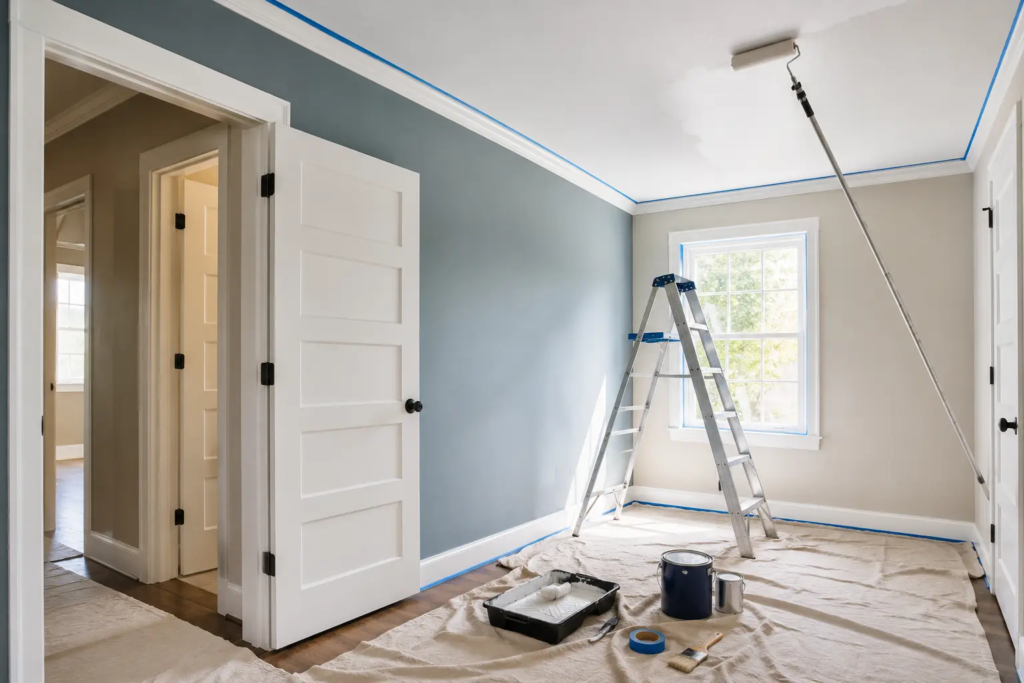
Painting several areas of a room can create a much more complete transformation than changing the wall color alone.
However, once homeowners decide to paint the walls, ceiling, trim, and doors, another question quickly appears:
What should you paint first?
The order matters because a good painting sequence can make the project more efficient. It can also reduce unnecessary touch-ups and help create cleaner transitions between surfaces.
In many projects, painters begin with the ceiling before moving to other surfaces. The exact order of walls, trim, and doors can vary based on the project and painting method.
For homeowners in Wheaton, Naperville, Elgin, Geneva, Addison, Hanover Park, and surrounding western suburbs of Illinois, planning the complete room before painting begins can save time and prevent confusion.
What Is the Best Order for Painting a Room?
There is not one painting sequence that must be followed for every project.
However, a common approach is:
- Prepare the surfaces
- Paint the ceiling
- Paint the walls
- Paint the trim and baseboards
- Paint the doors and door frames
- Complete final touch-ups
Some professional painters may choose to paint trim before walls.
The best approach depends on the surfaces, products, equipment, and application method being used.
What matters most is having a clear plan before the project starts.
Surface Preparation Should Always Come First
Before deciding whether to paint the ceiling or walls first, inspect the room.
Painting over damaged or poorly prepared surfaces can make imperfections more noticeable.
Look for:
- Nail holes
- Dents
- Cracks
- Scuffs
- Peeling paint
- Rough patches
- Damaged trim
- Previous repairs
- Stains
Depending on the condition of the room, preparation may include cleaning, patching, sanding, caulking appropriate gaps, and priming selected areas.
Paint should be one of the final steps, not the first.
Why Paint the Ceiling First?
Painting the ceiling first is a common approach because small drips or splatters may reach the walls.
If the walls have not been finished yet, those areas can be covered later during wall painting.
This can make the process easier.
Ceilings also require painters to work overhead. Completing them first allows the rest of the project to continue without having to return to overhead painting after the walls are finished.
Homeowners should inspect the ceiling before automatically deciding to skip it.
A ceiling that looked acceptable before the project may appear dull once the surrounding walls receive fresh paint.
Should You Paint Walls or Trim First?
This question has more than one correct answer.
Some painters prefer to complete the walls first and then carefully paint the trim.
Others prefer painting trim first, allowing it to dry, and then creating clean wall lines around it.
Professional painters may choose a method based on their workflow and the specific room.
For a homeowner completing a DIY project, painting the walls before the trim can feel more straightforward.
However, careful masking and cutting-in remain important regardless of the order.
What Is Cutting In?
Cutting in refers to carefully painting areas where a roller cannot provide a clean finish.
These areas commonly include:
- Ceiling edges
- Corners
- Around windows
- Around doors
- Along baseboards
- Around trim
A brush is often used for these detailed areas.
The goal is to create clean transitions between different surfaces and colors.
Careful cutting-in is one of the details that can distinguish a rushed paint job from a more professional-looking result.
When Should Baseboards Be Painted?
Baseboards experience significant wear.
Shoes, furniture, cleaning equipment, pets, dust, and everyday activity can leave marks over time.
If the walls are receiving fresh paint, older baseboards may suddenly become more noticeable.
Baseboards are commonly painted as part of the trim stage.
Before painting, they should be inspected for dirt, chips, gaps, and surface imperfections.
Preparation can make a major difference in the finished appearance.
Should Doors Be Painted at the Same Time?
Interior doors can significantly influence the appearance of a room.
Doors are frequently touched and can develop scratches, fingerprints, chips, and other signs of use.
A freshly painted room with heavily worn doors may still look unfinished.
Homeowners should therefore inspect the doors and frames while planning the project.
If they need attention, painting them during the same project can create a more consistent appearance.
Should Door Frames and Window Trim Be Included?
Door frames and window trim help define the boundaries of a room.
Fresh trim can create a clean contrast against newly painted walls.
However, trim painting can require detailed preparation and application.
Homeowners should decide whether these surfaces are included before requesting a painting estimate.
Do not assume that an estimate for wall painting automatically includes windows, baseboards, doors, and frames.
Do Walls and Trim Need Different Paint?
They often can.
Walls and trim serve different purposes and experience different types of contact.
Trim, baseboards, and doors may require finishes selected for durability and cleaning.
Wall finishes can vary according to the room.
For example, the needs of a bedroom may differ from those of a kitchen, bathroom, or busy hallway.
The correct paint product should be selected according to the surface and its use.
What About Painting Everything the Same Color?
Using the same or similar colors across walls, trim, and doors has become an option in some interior designs.
Other homeowners prefer strong contrast.
For example, neutral walls combined with crisp trim can create clear architectural definition.
There is no universal color combination that works for every house.
Natural light, flooring, furniture, room size, and personal preferences should all influence the decision.
Should You Paint the Ceiling When Repainting Walls?
Not necessarily.
A ceiling in excellent condition may not need painting.
However, inspect it carefully before making that decision.
Look for discoloration, previous patches, marks, and uneven areas.
A fresh wall color can change how the ceiling appears because the two surfaces are directly next to each other.
If the ceiling looks noticeably older than the walls, painting both may produce a more complete result.
Painting a Room Before Moving Into a Home
Move-in painting is a good opportunity to consider the entire room.
When the property is empty, painters have easier access to walls, ceilings, doors, baseboards, and trim.
There is also less furniture to move or protect.
Homeowners moving into properties in Naperville, Wheaton, Geneva, Elgin, Addison, or Hanover Park may find it easier to complete larger interior painting projects before moving day.
This also allows the new colors to be established before furniture and decorations are placed.
Painting Before Selling Your Home
The same principle applies when preparing a property for sale.
Homeowners often focus on walls because they cover the largest visible areas.
However, worn doors and damaged trim can still affect the overall appearance.
Inspect the entire room.
Sometimes painting the walls is enough. Other rooms may benefit from attention to ceilings, baseboards, doors, and trim.
The goal should be a clean and consistent presentation rather than painting surfaces that do not need attention.
Professional Interior Painting in the Western Suburbs of Illinois
Larger interior painting projects can involve many individual surfaces.
Planning them together helps establish the correct scope before work begins.
Crestora Home Services provides residential painting services throughout Wheaton, Naperville, Elgin, Geneva, Addison, Hanover Park, and surrounding western suburbs of Illinois.
Homeowners can identify which walls, ceilings, doors, and trim they want included before receiving a project estimate.
Frequently Asked Questions About Painting Walls, Ceilings, Trim, and Doors
Should you paint the ceiling or walls first?
The ceiling is commonly painted before the walls. This allows minor drips or splatters on unfinished walls to be covered when the walls are painted. The exact process can vary depending on the project.
Should you paint walls or trim first?
Both methods are used. Some painters complete walls before trim, while others paint trim first. The best order depends on the painting method, products, surfaces, and workflow.
Should I paint baseboards when painting the walls?
Not automatically. Inspect the baseboards first. If they are scratched, chipped, discolored, or noticeably worn, painting them can create a more complete appearance alongside fresh walls.
Do ceilings need to be painted every time walls are painted?
No. A ceiling that remains clean and consistent may not require repainting. However, older ceilings can become more noticeable once the walls have fresh paint.
Are doors normally included in interior painting?
That depends on the project estimate. Doors, frames, walls, ceilings, and trim can be treated as separate surfaces. Make sure every area you want painted is specifically included in the scope.
Can walls and trim use the same paint finish?
They can, but different surfaces often have different requirements. Trim and doors may benefit from finishes selected for durability and cleaning. The appropriate product depends on the room and surface.
What should be done before painting a room?
Inspect and prepare the surfaces first. Preparation may include cleaning, filling nail holes, patching minor imperfections, sanding, caulking appropriate areas, and priming when needed.
Does Crestora Home Services paint walls, ceilings, doors, and trim?
Crestora Home Services provides residential painting services throughout Wheaton, Naperville, Elgin, Geneva, Addison, Hanover Park, and surrounding western suburbs of Illinois. The exact surfaces included should be established as part of each project’s scope.
Plan the Entire Room Before Painting Begins
The best painting projects begin with a plan.
Do not think only about the walls.
Look at the ceiling, baseboards, doors, frames, and window trim. Determine which surfaces still look good and which ones need attention.
Then establish the painting order and project scope.
For many projects, the ceiling comes first, followed by walls and detailed surfaces. However, professional painters may adjust the sequence depending on the room and application method.
Crestora Home Services provides professional residential painting throughout the western suburbs of Illinois.
If you are planning to refresh one room or several areas of your home, request a free painting quote based on the surfaces you want painted.