A fresh coat of paint can transform a home. However, the quality of the final result depends on much more than the paint itself.
One of the most important steps happens before the paint can is opened.
That step is painting surface preparation.
Walls and exterior surfaces may look ready for paint from a distance. A closer inspection can reveal nail holes, cracks, peeling areas, dirt, rough patches, and previous repairs.
Applying fresh paint without addressing these issues can make imperfections more noticeable.
For homeowners in Wheaton, Naperville, Elgin, Geneva, Addison, Hanover Park, and surrounding western suburbs of Illinois, proper preparation can make a major difference in both interior and exterior painting projects.
What Is Painting Surface Preparation?
Surface preparation is the process of getting a wall or other surface ready for paint.
The exact process depends on the condition and material being painted.
Preparation may include:
- Cleaning
- Removing loose material
- Filling nail holes
- Patching minor imperfections
- Sanding rough areas
- Scraping peeling paint
- Caulking appropriate gaps
- Protecting surrounding areas
- Applying primer when needed
Not every surface requires every step.
The goal is to identify what the individual surface needs before applying paint.
Why Is Surface Preparation So Important?
Paint works best when it has a suitable surface underneath it.
Imagine painting a wall that contains visible dents and rough patches.
New paint may change the color. It will not necessarily remove those imperfections.
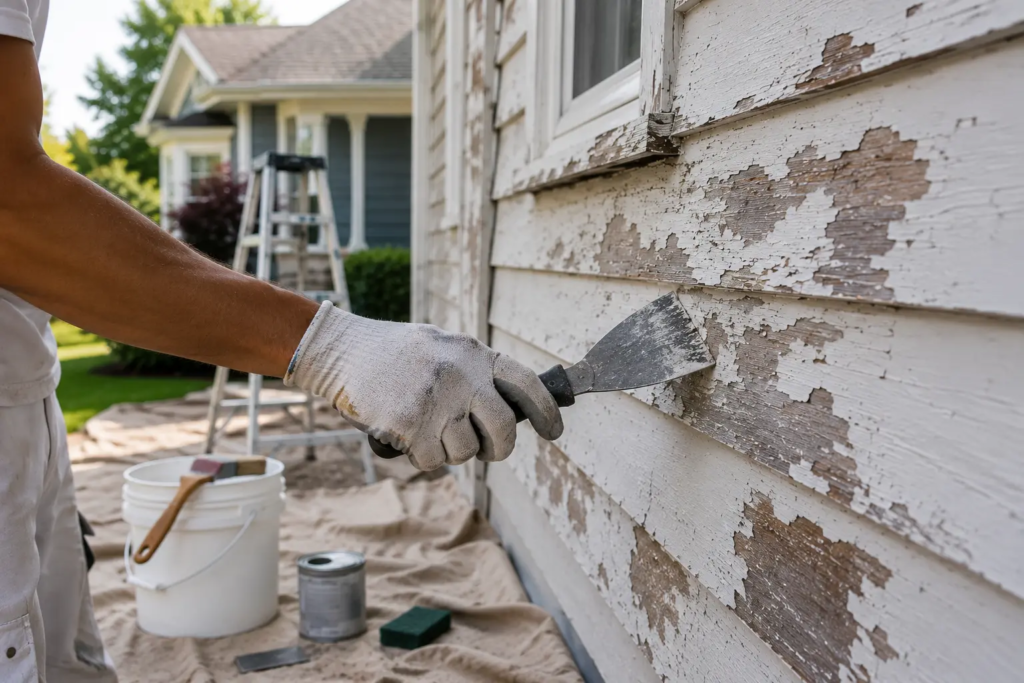
The same principle applies to peeling exterior paint.
Applying another coating over loose material does not correct the condition underneath.
Preparation helps create a more consistent foundation for the new finish.
Cleaning Before Painting
Walls and exterior surfaces can collect dirt over time.
Interior walls may have dust, fingerprints, grease, and other residue.
Kitchens and busy areas can require particular attention.
Exterior surfaces face different conditions. Dirt, dust, and environmental buildup can affect the surface.
The appropriate cleaning method depends on what is being painted.
The important point is simple. Paint should be applied to a surface that has been properly evaluated and prepared.
Why Nail Holes Should Be Addressed
Nail holes are common in residential interiors.
Pictures, decorations, shelving, and other items can leave small holes behind.
These imperfections may seem minor before painting.
Once the wall has a fresh, uniform color, they can become more noticeable.
Filling and preparing small holes before painting can create a smoother finished appearance.
This is especially useful when preparing a home for sale or a rental property for new tenants.
Patching Minor Wall Imperfections
Walls can develop more than nail holes.
Furniture may cause dents. Previous work can leave uneven areas. Everyday activity can create small imperfections.
Minor patching can address many of these issues.
However, patching alone is not always enough.
A repaired area may also need sanding or primer before paint is applied.
The goal is to make the repaired surface blend more naturally with the surrounding wall.
Why Sanding Matters Before Painting
Sanding can help smooth rough areas and previous repairs.
A patch may feel uneven after it dries. Old paint can also have rough edges or other imperfections.
Careful sanding can create a smoother transition.
This can be particularly important in areas where natural or artificial light hits the wall from an angle.
Light can make surface imperfections easier to see.
Preparing Previously Painted Walls
Previously painted walls may require less preparation when they are in excellent condition.
However, they should still be inspected.
Look for:
- Chips
- Cracks
- Nail holes
- Stains
- Rough patches
- Previous repairs
- Peeling areas
- Excessive scuffs
A simple color change and a damaged wall are two very different painting projects.
Understanding the existing condition helps determine how much preparation is needed.
Preparing Surfaces for a Major Color Change
Changing from one color to another can affect the painting process.
A dramatic color change may require additional consideration.
The existing color, new color, paint product, and surface condition can all influence the approach.
Primer may be appropriate in some situations.
A professional painter can evaluate the wall before determining the best painting system for the project.
When Is Primer Necessary?
Primer is an important preparation product, but it is not automatically required on every wall.
It may be useful for:
- Bare surfaces
- Repaired areas
- Certain stains
- Significant color changes
- New materials
- Surfaces requiring better adhesion
The correct approach depends on the individual project.
Using the right primer where necessary can help create a more consistent base for the finish coats.
Exterior Surface Preparation Is Especially Important
Exterior painting creates additional challenges because surfaces are exposed to the weather.
Homes throughout Illinois experience rain, snow, moisture, sunlight, and changing temperatures.
Exterior paint can eventually peel, crack, fade, or deteriorate.
Before repainting, loose and unstable material should be addressed.
Depending on the condition of the property, exterior preparation may include cleaning, scraping, sanding, and priming appropriate areas.
Painting directly over a deteriorated surface may not provide the desired result.
Illinois Weather and Exterior Preparation
Surface preparation is not only about what painters do to the house.
Weather conditions matter as well.
Exterior surfaces need to be suitable for painting.
Rain or high moisture can affect project scheduling. Temperature can also influence when certain products should be applied.
Homeowners in Naperville, Wheaton, Elgin, Geneva, Addison, and Hanover Park should expect exterior painting schedules to consider local weather conditions.
Rushing because a particular date was originally selected is not always the best approach.
Surface Preparation for Rental Properties
Rental properties can require significant preparation between occupants.
Walls may contain nail holes, scuffs, scratches, marks, and previous touch-ups.
Simply repainting without evaluating these areas can result in an inconsistent appearance.
Preparing the walls first can help create a cleaner look for the next tenant.
Landlords and property managers should inspect the entire property before deciding which areas need touch-ups and which need complete repainting.
Preparation Before Selling a Home
Surface preparation can also be important when painting before selling.
Potential buyers may notice obvious patches, dents, nail holes, and damaged-looking surfaces.
Fresh paint alone does not guarantee these problems disappear.
Preparing the walls before repainting can help create a cleaner presentation.
This is especially important in high-visibility areas such as living rooms, entryways, hallways, and kitchens.
Professional Preparation vs Quick Painting
Painting quickly and painting efficiently are not the same thing.
Skipping preparation can reduce the amount of work at the beginning of the project.
However, it can also affect the finished appearance.
Professional painters evaluate surfaces before applying paint.
The amount of preparation should match the actual condition of the property.
A wall in excellent condition may need very little work. A damaged or heavily used surface may need much more.
Frequently Asked Questions About Painting Surface Preparation
What is surface preparation before painting?
Surface preparation is the process of getting a surface ready for paint. It can include cleaning, patching, sanding, scraping, caulking, and priming depending on the condition and material.
Do walls need to be cleaned before painting?
Some walls may require cleaning to remove dust, grease, dirt, or other residue. The appropriate preparation depends on the condition and location of the surface.
Should nail holes be filled before painting?
Yes, when you want a smoother and more consistent appearance. Nail holes can remain visible under fresh paint if they are not properly addressed.
Do you have to sand walls before painting?
Not every wall requires complete sanding. Rough patches, repaired areas, and certain existing surfaces may need sanding to create a smoother foundation.
Can you paint directly over peeling paint?
Loose or peeling paint should generally be addressed before new paint is applied. Applying fresh paint over unstable material does not correct the underlying problem.
Is primer part of surface preparation?
Yes, when primer is needed. Bare surfaces, repairs, certain stains, and significant color changes are examples of situations where primer may be appropriate.
Is exterior paint preparation different from interior preparation?
Yes. Exterior surfaces face weather exposure and may require cleaning, scraping, sanding, and other preparation based on their condition. Weather also affects when exterior painting can be completed.
Does Crestora Home Services prepare surfaces before painting?
Surface preparation is part of achieving professional painting results. The specific preparation required depends on the condition of each project. Crestora Home Services provides residential painting services throughout Wheaton, Naperville, Elgin, Geneva, Addison, Hanover Park, and surrounding western suburbs of Illinois.
Better Painting Starts With Better Preparation
Choosing a great paint color is exciting.
However, what happens underneath the paint is just as important.
Cleaning, patching, sanding, scraping, and priming where appropriate can help create a better foundation for a professional finish.
This applies to both interior and exterior painting.
Crestora Home Services provides professional residential painting throughout the western suburbs of Illinois.
If your walls or exterior surfaces need a fresh appearance, request a free painting quote. The first step is evaluating the existing surfaces and determining what preparation your project requires.